

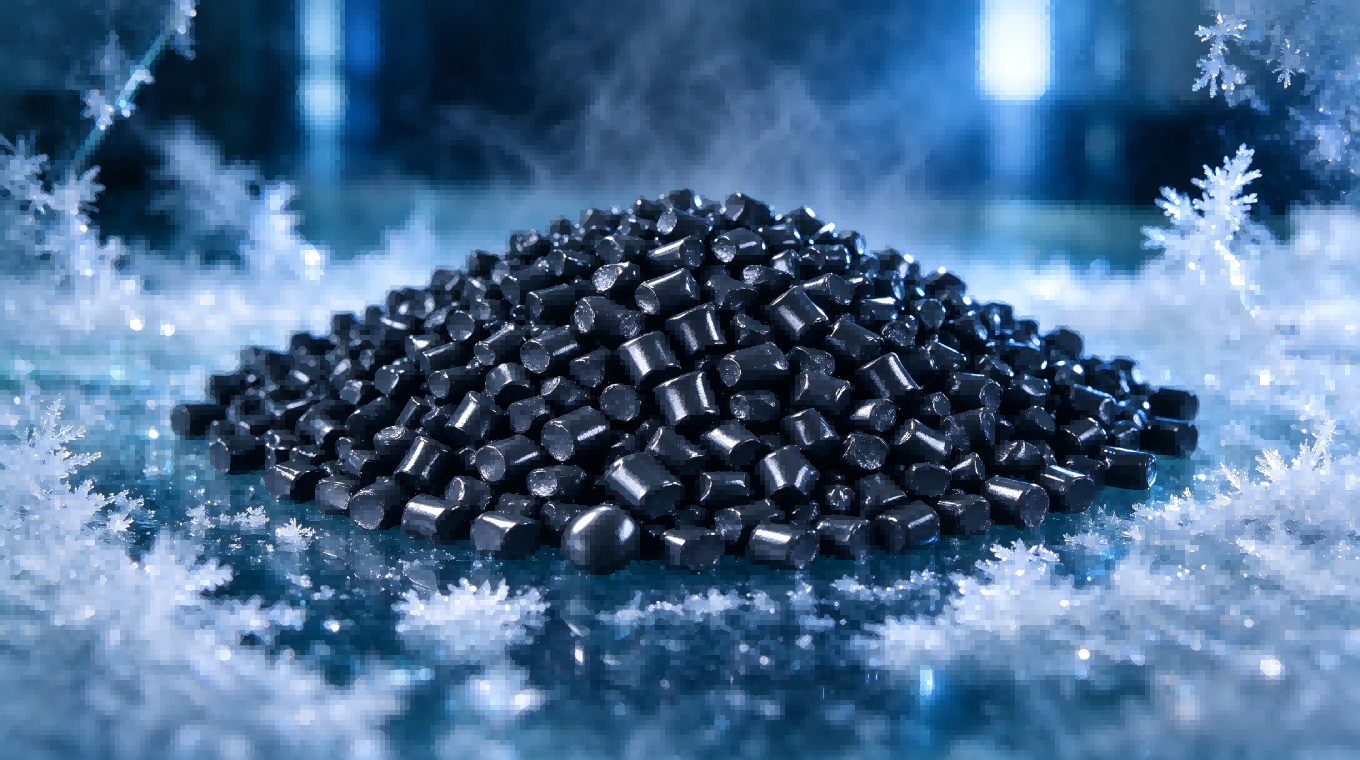
In an era where climate extremes are becoming the norm, the demand for materials that can withstand brutal winter conditions has never been higher. Today, leading polymer manufacturers unveiled a groundbreaking PC (Polycarbonate) cold-resistant material, designed to maintain structural integrity and high impact resistance in extreme low-temperature environments.
The new material, showcased in a recent product portfolio update (referencing the sleek, high-performance black pellets seen in the latest product lineup), addresses a critical flaw in traditional polycarbonate: its tendency to become brittle and shatter at sub-zero temperatures.
The Challenge of the Cold
For years, industries ranging from automotive to telecommunications have struggled with material failure during harsh winters. Standard plastics often lose their ductility, leading to cracked EV charging stations, shattered outdoor security cameras, and compromised battery housings in electric vehicles (EVs) operating in northern climates. As EV adoption accelerates globally, the demand for reliable, cold-weather engineering plastics is surging.
A Technological Leap in Polymer Science
The newly developed PC cold-resistant material utilizes a proprietary modification technology. By optimizing the polymer matrix and incorporating specific elastomeric impact modifiers, the material retains its legendary toughness even at -40°C.
Key technical highlights include:
Superior Impact Strength: Retains over 90% of its impact resistance at -30°C compared to room temperature.
Dimensional Stability: Resists warping and shrinking under rapid temperature fluctuations.
UV and Weather Resistance: Ideal for long-term outdoor exposure without yellowing or degradation.
"The industry has reached a tipping point where standard materials are no longer sufficient," said a senior materials engineer at the development lab. "This new PC/ABS blend variant is not just about surviving the cold; it's about performing flawlessly in it. We are seeing tremendous interest from Tier 1 automotive suppliers and outdoor infrastructure developers."
Market Impact and Future Applications
The introduction of this advanced PC cold-resistant material is expected to have an immediate impact across multiple sectors:
Electric Vehicles (EVs): Ideal for exterior trim, charging port housings, and battery pack enclosures that face direct winter exposure.
5G and Outdoor Infrastructure: Ensuring the longevity of pole-mounted antennas and smart city sensors in freezing climates.
Consumer Goods: Elevating the durability of winter sports equipment, power tools, and outdoor gear.
As manufacturers ramp up production to meet global demand, this innovative PC cold-resistant material stands as a testament to how material science is adapting to a changing world.