

I. Product Positioning: A Comprehensive Solution to the Dual Challenges of Marking Durability and Fire Resistance Compliance
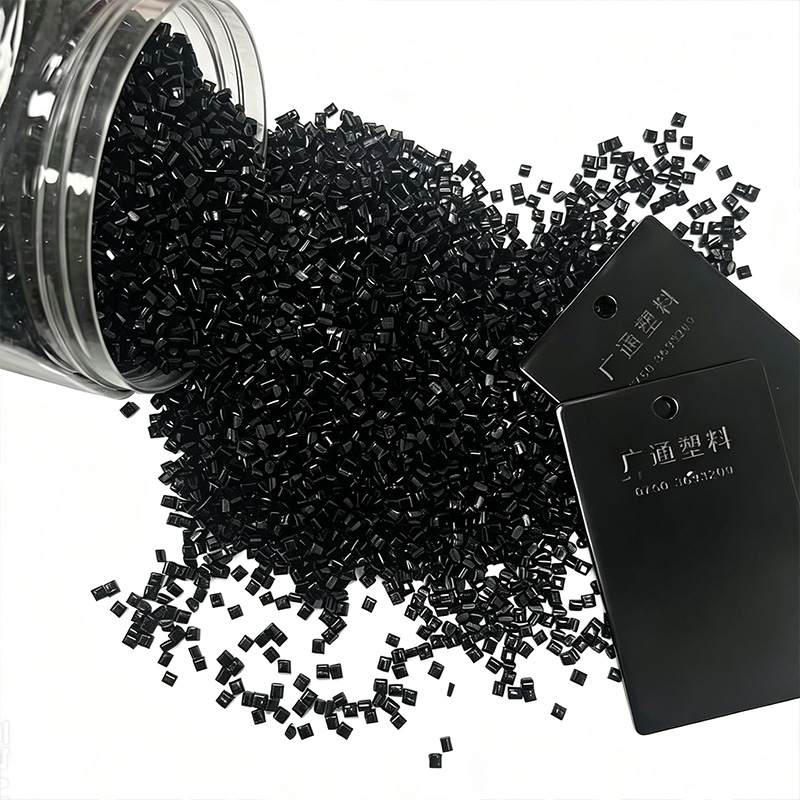
Flame-retardant laser-engraved PC is a functionally integrated modified engineering plastic. Unlike the traditional "substrate + post-processing printing" approach, it uniformly disperses laser-sensitive components and flame-retardant functional components within the PC resin matrix, achieving two core functions simultaneously at the material's intrinsic level.
It specifically addresses two long-standing pain points in the manufacturing industry: firstly, surface markings are easily worn and detached, failing to meet product lifecycle traceability requirements; secondly, post-processing marking can damage the flame-retardant properties of the substrate, causing components to fail safety certifications. This material can be directly molded into the final component in one step, requiring no additional marking processing. It possesses the triple attributes of structural, marking, and safety components, making it a preferred material for industrial manufacturing compliance upgrades and cost reduction/efficiency improvement.
II. Core Technology: Synergistic Blending System Achieves Mutual Preservation of Engraving and Flame-Retardant Properties
1. Precise Matching Technology for Laser Marking Additives
A dedicated laser-sensitive additive highly matched to the wavelengths of mainstream industrial lasers is selected and uniformly distributed within the substrate using a nanoscale dispersion process. 1. **Laser Irradiation:** During laser irradiation, the additives trigger a controllable thermochromic reaction, forming a clear mark with high contrast to the base color. The mark is embedded below the material surface, without raised areas, pits, or ink adhesion, fundamentally preventing the mark from disappearing due to wear, wiping, or solvent corrosion.
2.Synergistic Flame Retardant System Compatibility Technology:
Utilizing a halogen-free, environmentally friendly flame retardant compound system, efficient fire prevention is achieved through the synergistic effect of gas-phase and condensed-phase flame retardancy. Simultaneously, through formula optimization, it is ensured that the flame retardant components and laser additives do not interfere with each other or undergo side reactions. This ensures that the flame retardant does not reduce the engraving contrast, nor does it weaken the flame retardant effect, achieving stable compatibility of both functions.
3.Uniform Blending Process Guarantee:
Through a twin-screw precision temperature-controlled blending extrusion process, the two functional components are guaranteed to achieve molecular-level uniform dispersion in the PC matrix, resulting in high batch stability. This avoids issues such as uneven engraving effects and substandard flame retardant performance, meeting the consistency requirements of large-scale industrial production.
III. Product Matrix: Tiered Customization Solutions Covering Multiple Scenarios
- Tiered by Functional Emphasis
|
Product Series |
Core features |
Location Scene |
|
Standard General Series |
UL94 V-2 flame retardant, high-contrast black and white engraving, excellent value for money. |
Home appliance parts, general electronic casings, industrial signage |
|
High flame retardant engineering series |
UL94 V-0 flame retardant rating, supports fine engraving, and has excellent mechanical properties. |
Power supply housing, connectors, automotive electrical components |
|
Precision Welding Series |
UL94 V-0 flame retardant rating, excellent engraving uniformity, suitable for ultrasonic welding and laser welding. |
Precision electronic connectors, sealing components, automotive electrical components |
|
Weather-resistant outdoor series |
Flame retardant + UV resistant dual modification |
Outdoor equipment enclosures, power facility markings, security equipment |
(2) Classification by Molding Process
1. Injection Molding Grade Granules: Compatible with various injection molding processes, capable of directly producing complex structural parts, and is the mainstream choice for mass production of components in the electronics and automotive industries.
2. Extrusion Grade Sheets/Sheets: Capable of producing flat sheets of varying thicknesses, supporting secondary processing such as cutting, bending, and vacuum forming, suitable for control panels, equipment windows, large-area signage, etc.
3. Customized Modified Grades: Can be customized according to customer needs, including engraving colors, flame retardant ratings, antistatic properties, high and low temperature resistance, etc., matching the personalized requirements of special industries.
IV. Core Value: Four Advantages of Cost Reduction and Efficiency Improvement Throughout the Product Lifecycle
1. Zero Maintenance Costs, Lifetime Validity of Labels
The label is integrated with the material itself, resistant to friction, organic solvents, high and low temperatures, and UV aging. It remains clearly identifiable throughout the product's lifecycle, eliminating the need for rework, reprinting, or label replacement, significantly reducing subsequent maintenance costs.
2. One-Step Compliance, Meeting Global Certification Needs
Flame retardant performance is certified by authoritative safety regulations such as UL94. The material complies with environmental standards such as RoHS and REACH, eliminating the need for additional flame retardant post-treatment. This directly helps products pass safety compliance audits in various global markets, shortening the certification cycle.
3. Streamlined Production Processes, Improved Production Efficiency
Material function is simultaneously assigned during injection molding and extrusion molding, eliminating the need for subsequent printing, labeling, and spraying processes. This reduces production steps, shortens delivery cycles, and avoids product losses due to post-processing.
4. Stable and Reliable Performance, Expanding Application Boundaries
The material fully retains the high impact resistance, high toughness, and dimensional stability of the PC substrate, allowing it to be used directly as a structural load-bearing component. This breaks the limitation of traditional signage materials being only decorative, achieving "one piece, multiple functions."
V. Deep Application Scenarios: Precisely Matching the Rigid Needs of Multiple Industries
1. New Energy Electronics and Power Supply Industry
Applications include charger housings, energy storage connectors, power module housings, photovoltaic inverter components, etc., laser engraving product parameters, traceability QR codes, and safety markings, while meeting the mandatory flame-retardant requirements of power supply products, adapting to the high safety standards and traceability system construction needs of the new energy industry.
2. Automotive Parts Industry
Applications include vehicle switches, wiring harness connectors, body electronic controller housings, charging pile components, etc., achieving permanent identification of parts and full-chain traceability, while meeting the stringent flame-retardant, temperature-resistant, and vibration-resistant requirements of the automotive industry, adapting to complex automotive operating conditions.
3. Electrical Engineering and Explosion-Proof Equipment
Applications include low-voltage electrical appliance housings, switch panels, explosion-proof equipment housings, instrument components, etc., maintaining clear markings in harsh industrial environments, while meeting electrical insulation and fire/explosion-proof requirements, improving the safety and maintainability of equipment operation.
4. Consumer Electronics and Smart Hardware
Used in smart home appliance casings, digital product accessories, and wearable device structural components to achieve refined and aesthetically pleasing brand logos, functional markings, and product codes, while also meeting the fire safety and appearance quality requirements of consumer electronics.
5. Industrial Automation and Equipment Manufacturing
Applied to equipment control panels, operating buttons, mechanical parts, and protective devices, the markings are wear-resistant, oil-resistant, and will not become blurred over long-term use, while also meeting the fire safety standards of industrial equipment and adapting to the complex production environments of factories.
VI. Solution Comparison: Overall cost advantages of traditional signage solutions
|
Comparison Dimensions |
Flame-retardant laser engraving PC |
Ordinary flame-retardant PC + screen printing / pad printing |
Flame-retardant ABS + Label |
|
Label durability |
It will not peel off for life, and is resistant to solvents and abrasion. |
Wear and paint peeling are likely to occur within 1-3 years. |
It is prone to curling and peeling, and is not resistant to high temperatures. |
|
Flame retardant properties |
Flame retardant body, stable and intact performance |
The ink can damage the flame-retardant layer, resulting in localized non-compliance. |
The flame retardant material itself is flame retardant, but the flame rating is relatively low. |
|
Production process |
One-piece molding, no post-processing required |
Molding + Printing + Curing, multiple processes |
Molding and labeling processes have high labor costs. |
|
Production cycle |
Short, ready to be formed into a finished product |
Long, requires scheduling for printing |
Medium labor cost for labeling |
|
Comprehen -sive cost |
Mid-to-high-end unit price, lowest total life cycle cost |
Low unit price, but high maintenance and rework costs. |
Low entry cost, short lifespan, frequent replacements |
|
Complex structure adaptation |
Adaptable to any complex structure, 360° engraving |
Only compatible with flat surfaces; high defect rate when printing on complex surfaces. |
Suitable for flat surfaces only |
VII. Processing and Selection Guide: Practical Suggestions for Adapting to Different Production Lines
- Laser Equipment Matching:
Prioritize using a 1064nm fiber laser for engraving. Adjust power, frequency, and speed parameters according to the required marking precision. For small characters and QR codes, it is recommended to use high-contrast dedicated grades to improve recognition rate.
- Injection Molding Process Adaptation:
Mold according to flame-retardant PC standard process parameters to avoid excessive temperature causing functional component decomposition. Reserve reasonable gate locations in mold design to ensure uniform melt flow and avoid uneven distribution of functional components.
- Flame Retardant Rating Selection:
For household appliances and ordinary casings, V-2 grade products can be used to control costs; for power supplies, automobiles, and explosion-proof applications, UL94 V-0 grade products must be used to meet mandatory safety requirements.
- Welding Process Adaptation:
For components requiring ultrasonic welding or hot plate welding, use welding-specific grades to avoid problems such as flame retardant precipitation and reduced weld strength at weld joints using ordinary grades.
VIII. Industry Trends: Safety Standard Upgrades and Widespread Traceability Drive Material Iteration
- Tightening Safety Standards:
Global markets are increasingly demanding higher fire safety standards for electronics, automotive, and industrial equipment. Halogen-free, low-smoke, and high-flame-retardant materials will become mainstream, and the advantages of integrated materials with marking functions will become more prominent.
- Widespread Industrial Traceability:
With the advancement of Industry 4.0 and intelligent manufacturing, product lifecycle traceability systems will be fully implemented. Permanent, wear-resistant, and digitally readable laser markings will gradually replace traditional surface marking methods.
- Integrated Functions Become Mainstream:
Single-function materials will evolve towards multi-functional integration. Modified PC materials integrating flame retardancy, antistatic properties, weather resistance, and laser engraving will be better suited to the intensive needs of high-end manufacturing.
- Low-Carbon Manufacturing Upgrade:
Integrated materials reduce post-processing steps, lower production energy consumption and pollutant emissions, and are more in line with the global trend of low-carbon transformation in manufacturing, becoming a preferred solution for green supply chains.
IX. Conclusion
In the process of upgrading the manufacturing industry towards digitalization, compliance, and high quality, integrated modified materials that combine permanent marking with high-efficiency flame retardancy are becoming a new necessity in the industrial sector. Guangtong Plastics' flame-retardant laser-engraved PC material, through technological innovation, breaks through the industry dilemma of "difficulty in simultaneously achieving marking durability and fire resistance" in traditional solutions. By using a bulk modification technology path, it achieves functional integration and performance upgrades, not only solving the dual challenges of traceability and compliance for enterprises, but also providing strong material-level support for improving the quality and efficiency of the manufacturing industry through process simplification and full life-cycle cost optimization.
In the future, with the continuous improvement of safety standards and traceability systems in various industries, this type of multifunctional integrated modified engineering plastic will gradually replace traditional combination solutions and become a basic standard material in the industrial manufacturing field.