

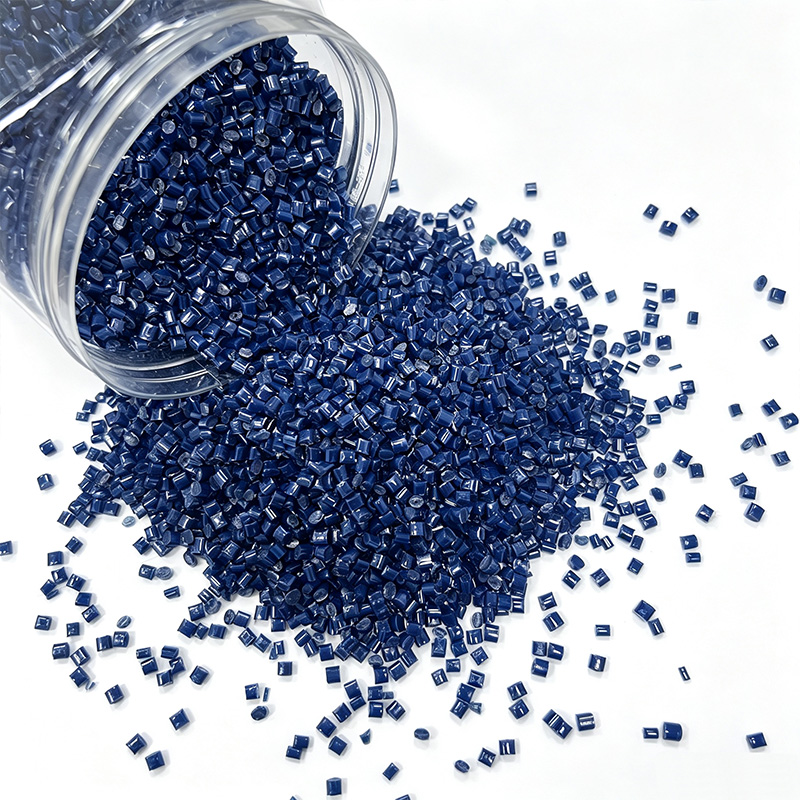
PC thermal insulation material is a functional engineering plastic made from polycarbonate (PC) resin as the base material and modified with nano-inorganic metal oxides. While retaining the inherent advantages of PC substrates such as impact resistance, lightweight, and ease of molding, it achieves the dual characteristics of high visible light transmittance and efficient infrared heat blocking. It can effectively block heat transfer from infrared radiation for a long time while maintaining a high-definition optical effect with extremely low haze. It is an upgraded alternative for thermal insulation structural components in the automotive, electronics, and industrial equipment fields.
I. Basic Definition and Core Positioning
PC thermal insulation material belongs to the spectrally selective modified PC category. Using optical-grade polycarbonate as the matrix, it achieves directional blocking of the infrared band in the solar spectrum by uniformly dispersing nanoscale inorganic functional fillers within the substrate, while maximizing the retention of visible light transmittance.
Unlike traditional organic heat-absorbing insulation materials, this material employs a "reflection + absorption" composite insulation mechanism. Its performance does not degrade due to long-term heat accumulation. It is an integrated material combining optical visibility, structural support, and thermal management capabilities, and can directly replace traditional insulated glass and ordinary plastic insulation components. It is suitable for industrial scenarios with multiple requirements for light transmission, heat insulation, and safety.
II. Core Thermal Insulation Principle
The thermal insulation performance of this material stems from the spectral modulation capability of the nano-inorganic filler:
- High-efficiency infrared blocking: The functional filler can strongly reflect and absorb near-infrared wavelengths above 780nm, achieving an infrared blocking rate of over 99.5%, blocking the penetration of infrared radiation heat at its source;
- High visible light transmittance and clarity: The filler particle size is precisely controlled at the nanoscale, avoiding scattering of visible light. The material's visible light transmittance is >89%, and the finished product's haze value is below 0.5, resulting in excellent optical clarity;
- Long-term stable performance: Using inorganic metal oxides as the active functional component, the material is chemically stable and will not fade, yellow, or degrade due to ultraviolet radiation or high-temperature environments, maintaining its thermal insulation effect over a long period.
III. Product Forms and Process Classifications
(1) Classification by Product Form
- Insulating PC Granules: Basic raw material form, directly usable for injection molding and extrusion molding, suitable for mass production of complex-structured insulating parts, such as automotive insulating brackets and electronic device insulating housings;
- Insulating PC Sheets: Sheet-shaped finished products produced through extrusion processes, which can be cut, bent, and thermoformed, suitable for large-area insulating windows, equipment protective covers, building lighting structures, etc.
(2) Classification by Modification Process
-Bulk Blending Modification Type: Nano-insulating functional masterbatch is uniformly blended and extruded with PC substrate in a twin-screw extruder. The functional components are evenly distributed inside the material, resulting in long-lasting insulation, scratch and wear resistance, and support for secondary processing. This is the mainstream choice in the industrial field.
-Coating Composite Type: A nano-insulating coating is applied to the surface of standard PC sheets to achieve insulation function. This method has lower cost, better optical uniformity, and is suitable for flat window scenarios without complex secondary processing requirements.
IV. Core Performance Advantages
1. Superior Optical and Thermal Insulation Performance
Achieving a balance of performance with visible light transmittance >89%, thermal insulation >99%, and infrared blocking >99.5%; the finished product has a haze value below 0.5, with no significant visual distortion, making it irreplaceable in thermal insulation scenarios requiring visible observation.
2. Outstanding Mechanical Structural Performance
Inheriting the high impact resistance of PC substrate, its impact resistance is more than 200 times that of ordinary thermal insulation glass. It is not easily broken and can be used directly as a structural component; it also supports secondary processing such as bending, cutting, and punching, adapting to customized needs for non-standard structures.
3. Long-Term Stable Weather Resistance
Using inorganic metal oxides as the functional active ingredient, unlike organic dye-based thermal insulation materials, it will not fade, yellow, or degrade in performance due to ultraviolet radiation or long-term high-temperature environments, maintaining stable thermal insulation effects even after long-term outdoor use.
4. Lightweight and Easy to Process
Its density is significantly lower than traditional heat-insulating glass, weighing only about half that of glass of the same thickness, facilitating installation and structural weight reduction. It can be processed through various techniques such as injection molding, extrusion, and thermoforming, adapting to the mass production needs of complex parts.
V. Main Application Scenarios
1. Automotive Industry (Core Application Area)
It is a key material in automotive thermal management systems. Typical applications include:
- Engine area heat shields and exhaust area thermal insulation structures, blocking heat radiation from high-temperature components and protecting surrounding electronic and plastic components;
- Automotive headlight heat insulation brackets, blocking heat from the light source and preventing heat-induced deformation and aging of the lamp housing;
- Thermal protection components for new energy vehicle battery packs, maintaining the battery's operating temperature range and improving battery safety and lifespan.
2. Electronics and Electrical Appliances Industry
Used for heat-insulating windows, housings, and brackets in various heat-generating electronic devices, such as heat-insulating lenses for projectors, heat insulation structures for heat-generating areas of home appliances, and thermal shielding components for 5G equipment, ensuring visibility while blocking heat transfer and improving equipment operational stability.
3. Industrial and Construction Fields
It can be used for observation windows of high-temperature industrial equipment, thermal insulation windows in vehicles, and thermal insulation structures for building skylights, replacing traditional double-glazed windows. It achieves better thermal insulation while reducing weight and lowering temperature control energy consumption.
VI. Comparison with traditional thermal insulation materials
|
Comparison Dimensions |
PC thermal insulation material |
Ordinary heat-insulating glass |
Organic thermal insulation plastics |
|
Impact resistance |
Excellent, not easily broken |
Fragile and easily broken, posing a safety hazard. |
Generally, it is easily deformed under stress. |
|
Heat insulation effect |
Excellent performance, infrared blocking rate 99.5%+ |
Medium, dependent on coatings or hollow structures |
Generally, it tends to decay over time. |
|
Optical clarity |
High, haze <0.5 |
High, prone to optical distortion |
Generally, the fog level is high. |
|
Weather resistance |
Excellent, inorganic components do not fade. |
The coating is easy to fall off and fail |
Poor quality, prone to yellowing and degradation over time. |
|
Process- ability |
Can be injection molded, bent, and cut. |
Cutting is permitted, but bending is not. |
Injection moldable, low upper limit of heat resistance |
|
weight |
Lightweight |
Heavy |
Relatively light |
VII. Key Technical Considerations for Material Selection
1. Scenario Matching: For long-term outdoor use, prioritize bulk-modified blends. For short-term indoor use and flat surfaces, coated models can be chosen to control costs.
2. Thickness Selection: 3-5mm thickness is recommended for ordinary observation windows. For structural load-bearing and high insulation requirements, 6-10mm thickness is suggested to balance insulation performance and structural strength.
3.Processing Compatibility: For scenarios requiring secondary thermoforming and bending, bulk-modified granules/sheets should be used to avoid coating cracking and peeling after processing.
4. Environmental Compatibility: For long-term high-temperature and high-UV environments, confirm the material's temperature resistance and weather resistance rating, prioritizing inorganic modification systems.
VIII. Industry Technology Evolution Directions
1. Full-Spectrum Functional Upgrade: Building upon existing infrared blocking capabilities, adding full-band ultraviolet blocking to achieve "UV-IR" full-band shielding, further expanding outdoor application scenarios;
2. Multifunctional Composite Modification: Integrating multiple functions such as heat insulation, flame retardancy, and antistatic properties to meet the composite performance requirements of high-end fields such as new energy and semiconductors;
3. Low-Carbon and Environmentally Friendly Formula: Optimizing production processes and raw material systems to comply with environmental regulations such as RoHS and REACH, meeting the compliance requirements of export-oriented customers;
4. Customized Spectral Control: Customizing the blocking band of materials according to the heat source band characteristics of different industries to achieve more precise and efficient heat insulation effects.
IX. Conclusion
With its dual characteristics of "high light transmittance + high-efficiency heat insulation," excellent mechanical strength, long-lasting weather resistance, and lightweight advantages, PC thermal insulation materials effectively compensate for the shortcomings of traditional heat insulation glass (fragile and heavy) and organic heat insulation materials (rapid performance degradation), becoming an indispensable thermal insulation material in fields such as automotive thermal management, electronics, and industrial equipment.
With the rapid development of new energy vehicles and high-end manufacturing industries, modified PC insulation materials, which combine structural performance with precise thermal management capabilities, will replace traditional insulation solutions in more niche scenarios and become the mainstream choice in the field of industrial thermal protection.