

In the global chemical market of 2026, the shadow of geopolitics remains ever-present. The Strait of Hormuz—a vital artery through which approximately 30% of the world’s seaborne crude oil passes—exerts an influence that ripples far beyond its waters; any fluctuation in the efficiency of this passage is immediately felt on plastics trading screens thousands of kilometers away. For engineering plastics such as PC (polycarbonate) and PMMA (polymethyl methacrylate), which are heavily dependent on petrochemical monomers, the vulnerability of the supply chain was repeatedly tested throughout 2026. In March, an escalation of conflict in the Middle East forced shipping vessels to divert around the Cape of Good Hope—adding roughly 4,000 nautical miles to their journeys—which triggered a single-day price surge of 5.22% for PC. By September, with WTI crude oil climbing past $102 per barrel, the weekly price increase for PC reached 4.6%, while PMMA saw a corresponding rise of 1.1%. Cost pressures cascaded down the entire value chain—from crude oil to monomers, and finally to resins—impacting every downstream segment.
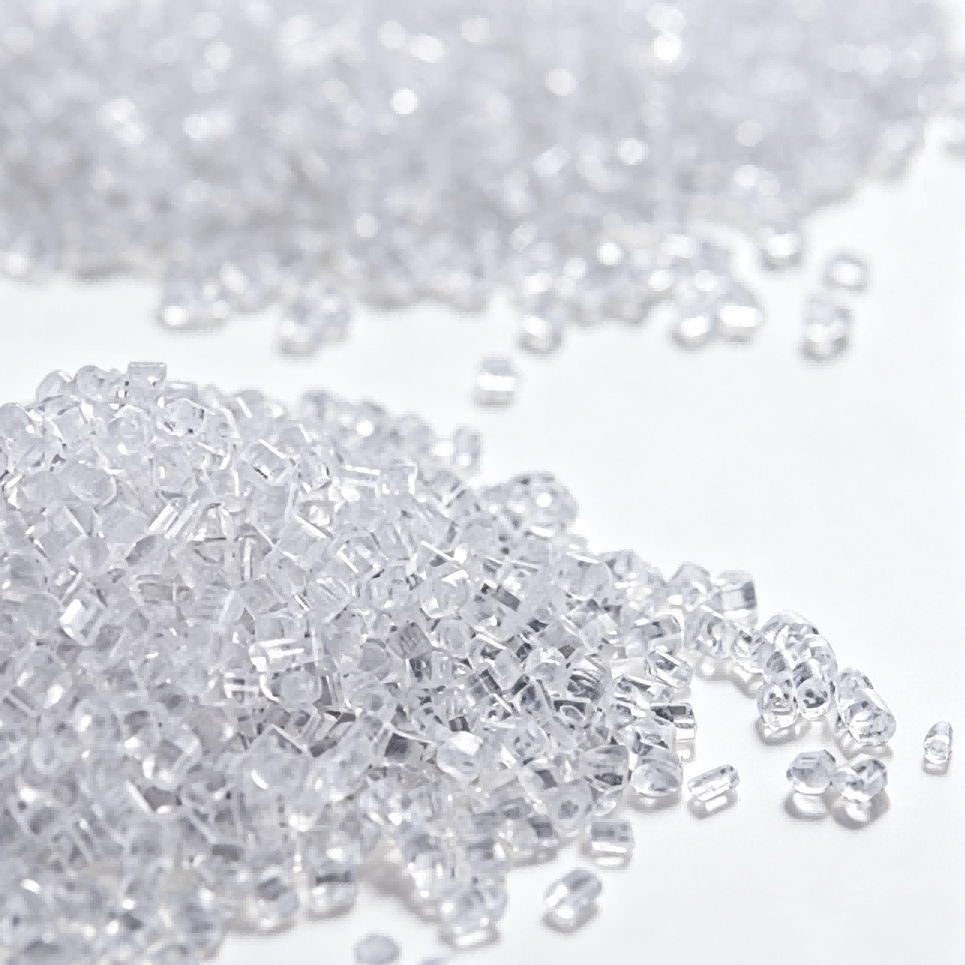
Yet, cost volatility is only part of the story. Beneath the surface of these dramatic price fluctuations, a quiet race to push the performance boundaries of light-guiding materials is unfolding across several fronts, including display panels, automotive optics, and short-range data transmission. PC, PMMA, and PS (polystyrene) light-guiding resins—transparent polymers prized for their high refractive index, superior optical properties, and engineering reliability—find themselves at a critical intersection: caught between mounting upstream costs and the relentless demand for higher-performance downstream applications.
Supply Chain “Stress Testing”: From Crude Oil to Optical-Grade Resin
The impact of the situation in the Middle East on PC (polycarbonate) and PMMA (polymethyl methacrylate) is not complex, yet its implications are profound. Disruptions to shipping through the Strait of Hormuz have driven up the landed costs of essential feedstocks—such as naphtha, propane, and methanol—with this cost pressure cascading through key monomers like bisphenol A (BPA) and MMA to the final resin products. PC is particularly sensitive, given that a significant portion of China’s PC imports originates from Saudi Arabia; shipping delays have directly slowed the pace of arrivals, leading to periodic spot-market shortages. While the domestic self-sufficiency rate for PMMA is higher, the rising cost of propane—a key feedstock for the PDH (propane dehydrogenation) production route—means it is not immune to these pressures.
This cost shock, triggered by external geopolitical risks, exposes a structural vulnerability: when the profit margins for commodity-grade PC and PMMA are repeatedly squeezed by rising feedstock costs, shifting toward high-value-added downstream optical applications is no longer merely an option—it becomes a survival strategy. Light-guide materials are the direct result of this logic; they demand resin standards—in terms of purity, light transmission, refractive index consistency, and processing stability—that far exceed those required for general-purpose injection molding or extrusion. Consequently, these materials are naturally insulated from the cutthroat price competition that plagues the low-end market.
Structural Pull from the Demand Side: Beyond Just “Lighting Up a Screen”
The traditional stronghold for light-guiding materials is the light guide plate (LGP) used in LCD backlight modules. Through micro- and nano-structures, these thermally roll-pressed plates convert point or linear LED light sources into uniform area light sources. With a global revenue scale of approximately 2.4 billion RMB in 2025, the sector is experiencing steady overall growth alongside a structural shift: demand is migrating from mature applications—such as backlights for televisions and laptops—toward automotive displays, front-lighting for electronic paper, and specialized, irregularly shaped, or curved light-guiding structures. The automotive sector’s requirement for elongated, high-brightness, and weather-resistant/heat-resistant components highlights the comparative advantages of polycarbonate (PC) substrates in terms of impact resistance and thermal stability. Meanwhile, the trend toward ultra-thin designs imposes increasingly stringent demands on material flowability and the precision with which micro-structures are replicated.
Another growth trajectory stems from plastic optical fibers (POF). While PMMA serves as the primary core material for POF used in short-range data transmission, polystyrene (PS) and polycarbonate (PC) broaden the material spectrum for specialized or high-temperature applications. The global POF market, valued at approximately 6.136 billion USD in 2025, is projected to reach 10.924 billion USD by 2032—a compound annual growth rate (CAGR) of nearly 8.6%. In the context of new energy vehicles, the need for lightweight, electromagnetic interference-resistant communication links—essential for smart cockpits and battery management systems—is elevating light-guiding materials from mere "display accessories" to higher-value components that function as critical elements for signal transmission.
The "Problem-Solving Logic" Behind Performance Combinations
There exists a distinct gap between the pressures of upstream costs and the demanding requirements of downstream applications. High refractive index and superior light-guiding performance dictate the upper limit of light extraction efficiency per unit area; given the tightening constraints on light-source costs and energy consumption, this translates directly into the energy-efficiency competitiveness of end products. Exceptional impact resistance—surpassing that of glass—addresses the fundamental requirements for drop resistance, vibration tolerance, and long-term reliability in automotive, industrial control, and portable device applications. While the potential for replacing glass has long been discussed within the optics sector, polycarbonate (PC)-based light-guiding materials stand out as one of the few options that effectively balance transparency, toughness, and processability. Resistance to weathering and aging is critical for outdoor signage, exterior automotive lighting, and long-term service environments; once a light-guiding component yellows or turns hazy, the precision of the original optical design is effectively lost. Furthermore, attributes such as colorless transparency, heat resistance, chemical resistance (to acids and oils), flame retardancy, and robust mechanical and processing properties are not merely "selling points"—they are the essential entry requirements for optical-grade polymers to be utilized in precision injection molding, hot embossing, and extrusion processes.
As crude oil prices fluctuate between $70 and $100 per barrel, and shipping cycles shift from a daily to a weekly scale, the narrative surrounding light-guiding materials serves as a reminder: supply chain resilience is never defined solely by the depth of one’s inventory. Rather, it depends on whether the material itself occupies a sufficiently "irreplaceable" position within the value chain. Ultimately, the competitiveness of PC, PMMA, or PS light-guiding resins does not stem from an ability to evade geopolitical turbulence; instead, it lies in their capacity to provide downstream customers with a compelling reason—even amidst such volatility—to pay a premium for light that is more uniform and more reliable.