

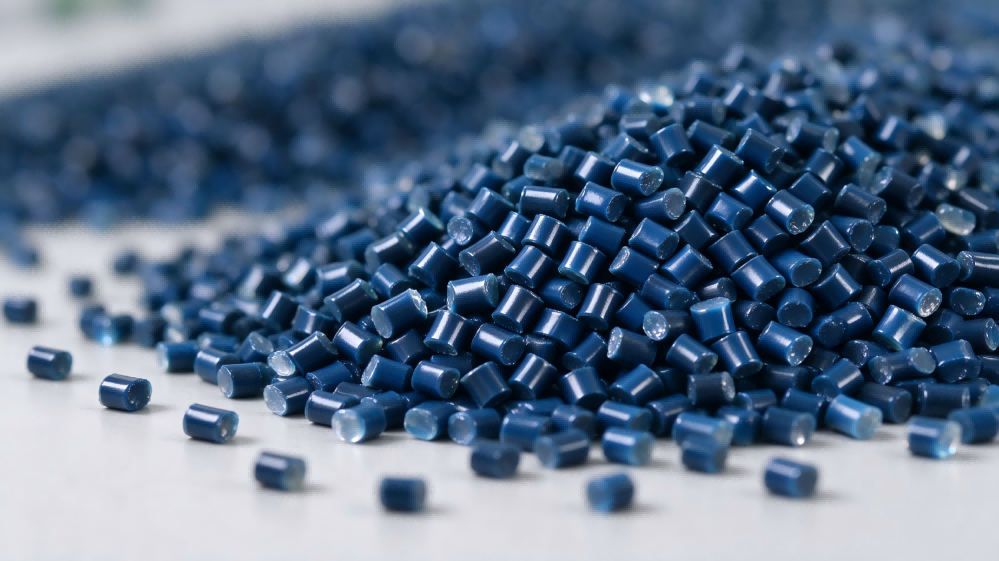
In 2026, the laser safety industry faces a risk landscape far more complex than it was five years ago. Data from the U.S. Federal Aviation Administration (FAA) indicates that in 2025, pilots reported 10,994 incidents of laser exposure—averaging more than 30 per day. While this represents a 14% decline from 2024, the absolute number remains at a historically high level. Meanwhile, a more subtle yet equally critical shift is occurring in law enforcement: as handheld laser devices become smaller and more affordable, frontline personnel face an ever-increasing risk of exposure to unplanned laser radiation during questioning, interdiction, and crowd control operations. As laser protection evolves from a mere "compliance requirement within a fenced-off industrial zone" into a mission-critical constraint for law enforcement, aviation, and individual field operations, the role of the core material—polycarbonate-based laser-protective plastic pellets—is undergoing a quiet yet irreversible elevation in strategic importance.
Demand side: Shifts in protective scenarios have altered the prioritization of materials.
The traditional logic for industrial laser protection is relatively straightforward: it centers on Optical Density (OD). Each increment of 1 in the OD value signifies a tenfold increase in attenuation; in high-power cutting and welding applications, requirements for OD 6 or even OD 7+ are not uncommon. However, laser-protective eyewear designed for police and law enforcement must meet a distinct and complex set of constraints. The lenses must offer high visible light transmission to ensure the wearer’s perception of a dynamic environment remains undistorted, while also possessing the mechanical robustness to withstand drops, collisions, and the physical impacts typical of law enforcement operations—all while providing the necessary attenuation for specific narrow-band wavelengths. Among available engineering plastics, polycarbonate stands out as the primary transparent thermoplastic substrate capable of satisfying these multifaceted requirements. In the global market for laser-protective windows, polycarbonate ranks alongside glass and acrylic as a core material; in the specific sector of laser-protective eyewear, polycarbonate-based products accounted for approximately 55% of total revenue in 2024. This market share is structurally underpinned by the material’s lightweight nature and impact resistance, rather than being merely the result of incidental purchasing preferences.
A more profound shift is occurring in how demand signals are transmitted. Previously, manufacturers of protective eyewear would procure "laser-protective polycarbonate" from material suppliers, complete the injection-molding process, and then submit the products for certification. Any fluctuations in the material’s optical properties were often only discovered retrospectively during the testing of the finished goods. As law enforcement and aviation sectors have begun to categorize laser protection as an integral component of a "personal protective system"—rather than as an isolated accessory—the certification standards for end-products have imposed stricter requirements for material consistency. Even minor variations in the dispersion of absorbing agents between batches of raw material pellets can cause injection-molded components to deviate from their nominal specifications for OD value or visible light transmission, potentially resulting in the failure of an entire batch to pass certification. This evolution in demand is shifting the focus of quality control upstream, moving it from the stage of finished-product testing to the raw material (pellet) phase.
Technical Perspective: Two Approaches, One Goal—Ensuring the Absorbent Enters the Injection-Molded Part in an "Active" State
The technical competition surrounding laser-protective polycarbonate (PC) pellets is, at its core, a race to ensure that the incorporated absorbing agents retain their functional integrity within the PC processing window. Polycarbonate injection molding typically takes place at temperatures between 260°C and 300°C; however, highly efficient near-infrared (NIR) absorbing dyes—often engineered with extensive conjugated structures to boost NIR absorption—are inherently prone to decomposition at such high temperatures. Patent literature explicitly acknowledges this: developing infrared absorbers that remain thermally stable within PC materials is a widely recognized challenge in the industry.
In response to this constraint, current technical approaches have diverged along distinct paths:
The first approach is an "organic system with ultra-low additive loading." According to published patents, an infrared-blocking effect can be achieved in a polycarbonate (PC) matrix (98.7–99.4 parts) by incorporating 0.1–0.3 parts of a nickel dithiolate complex alongside 0.1–0.6 parts of a phenyl-phosphorus compound. This approach emphasizes a balance between "integrated extrusion molding" and "optical performance," specifically targeting applications such as laser-protective eyewear. The underlying rationale is that lower additive concentrations minimize interference with the PC matrix’s inherent transparency, impact toughness, and processing window. However, low loading alone is not the complete solution; the true challenge lies in ensuring the uniform dispersion of the absorbers at such minute concentrations, as well as maintaining this dispersion state throughout the shear history experienced during injection molding. In this approach, the particles are not merely passive carriers; rather, they serve as the critical process starting point that dictates the final spatial distribution of the absorbers.
The second approach involves the integration of inorganic functional masterbatches into organic polymer systems. These masterbatches, which utilize cesium tungsten bronze nanoparticles as the core active component, exhibit strong absorption in the 800–1400 nm near-infrared (NIR) range while maintaining over 70% transmittance in the 550 nm visible light spectrum. When incorporated into PC/PMMA matrices, they form uniform blue-black granules with a haze value that can be kept below 0.5%. The primary advantage of this inorganic system lies not in the precision of its absorption peaks, but in its functional stability throughout the entire product lifecycle; it effectively overcomes the inherent drawbacks of organic NIR absorbers, such as susceptibility to photodegradation, migration, and yellowing. In practical applications, protective panels manufactured using these masterbatches are already capable of blocking 980 nm and 1064 nm industrial lasers, with development now extending toward high-definition laser-protective visors and personal protective equipment (PPE) for individual personnel. This signifies that the protective range of PC-based laser-shielding materials is expanding from a focus solely on the 1064 nm Nd:YAG wavelength to a broader NIR window—a wide-spectrum coverage that is a critical requirement for addressing the diverse array of laser sources encountered in law enforcement and military environments.
These two approaches are not mutually exclusive alternatives, but rather parallel solutions tailored to different performance priorities. Organic narrow-band systems strive for an optimal balance between high optical density (OD) at specific wavelengths and high visible-light transmission, whereas inorganic broad-band systems trade some spectral selectivity for greater stability and a wider range of wavelength coverage. For material suppliers, true competitiveness lies not in the choice of approach, but in the ability to ensure that the selected solution performs with reproducible precision when integrated into injection-molded components. Market trends reflect this shift: the focus in the development of laser-protective windows is converging toward higher OD values, multi-wavelength blocking, and enhanced impact resistance—making it increasingly difficult to sustain a competitive advantage based on a single performance metric alone.
Supply Chain and Compliance: Pellets Become the First Link in the Certification Chain to Face Accountability
Market data for laser safety foils provide a quantitative benchmark for the role of polycarbonate (PC) pellets within the spectrum of protective materials. The global laser safety foil market, valued at approximately $302 million in 2024, is projected to reach $503.6 million by 2032—a compound annual growth rate (CAGR) of 6.6%—with polycarbonate foils representing a key product segment. This growth is driven by the accelerated adoption of high-power lasers in metal cutting, welding, and marking, as well as their expanding use in medical aesthetics and ophthalmic surgery. Collectively, these applications create a systematic demand for protective materials that offer high optical density (OD), multi-wavelength coverage, and robust mechanical and chemical durability.
However, market expansion is only the surface of the story. A more structurally significant shift is occurring due to the intensive updating of regulatory standards. In China, GB/T 7247.4-2025—which adopts the international standard IEC 60825-4:2022—officially came into effect on September 1, 2025, superseding the 2016 version. Core testing requirements under this standard include the assessment of OD values (the material’s ability to attenuate lasers at specific wavelengths) and PEL (Protective Exposure Limit) values—the threshold of incident laser radiation a protective screen can withstand without sustaining damage or burn-through. While these standards apply to finished protective screens, their performance is fundamentally determined at the pellet stage by the material’s formulation and the quality of additive dispersion. Factors such as the uniformity of absorber dispersion within a PC pellet, the impact of thermal history on absorber activity, and batch-to-batch optical performance drift can manifest in final product testing either as minor fluctuations—potentially "masked" through process adjustments—or as entire batches that fail certification and must be scrapped.
For PC-based laser protection pellets targeting the global market, the shift in the burden of proof for regulatory compliance carries two major implications. First, a standard Material Safety Data Sheet (MSDS) is no longer sufficient to qualify for entry into high-value protective markets. Pellet suppliers must now be prepared to provide batch-specific optical performance data—directly correlated to end-product OD and PEL test results—along with evidence confirming the stability of the absorber dispersion. Secondly, the coexistence of the ANSI Z136.1 and EN 207/EN 208 standards necessitates that the same raw material—the polymer granules—demonstrate verifiable, consistent performance across different certification frameworks. Japan’s 2025 revision of its *Safety Standards for Laser Products* further mandates that all commercially available laser protective eyewear must specify the applicable wavelength range, Optical Density (OD) rating, and maximum withstandable irradiance. Notably, over 42% of patent applications published between 2024 and 2025 relate to broadband protection (covering the full 400–1200 nm spectrum). This trend reflects a shared focus across major global markets: competition is increasingly centered on the broadband capabilities of the materials themselves and the traceability of their performance data.
Pressure is also mounting from the supply chain side. Regional capacity constraints—affecting specialty polymers, optical coatings, and precision manufacturing equipment—make the production costs of laser-protective materials highly sensitive to the stability of the upstream supply of granules. As polycarbonate continues to gain market share as a material for laser-protective eyewear, these granules can no longer be treated as generic commodities with easily swappable suppliers. Due to the combined effects of lengthy certification cycles and the "locked-in" nature of specific formulations, granules that have already established their optical performance data effectively create a "switching cost" for manufacturers, making it difficult to change suppliers for a significant period.
The industry narrative for PC (polycarbonate) laser-protection plastic pellets in 2026 can be distilled into a single assessment: competition at the material level is superseding competition at the finished-product level, emerging as the most decisive variable in the laser-protection value chain. Evolving requirements in law enforcement and aerospace applications have established a tripartite set of constraints: the material must provide effective shielding, ensure optical clarity, and remain lightweight/durable. Both organic (narrow-band) and inorganic (broad-band) material approaches are converging—from different directions—toward viable solutions that satisfy these constraints. Furthermore, the implementation of standards GB/T 7247.4-2025 and IEC 60825-4:2022 has shifted the burden of product certification upstream along the supply chain, making the consistency of pellet batches the first point in the compliance chain that requires verification—and the first point subject to accountability. Far from being mere passive additives, these pellets now serve as the essential precursors that enable laser-protection optical functions to be realized with the intended design precision. Whoever defines the pellets, to a large extent, defines the upper limit of the finished product's performance.