

I. Basic Definition and Core Positioning
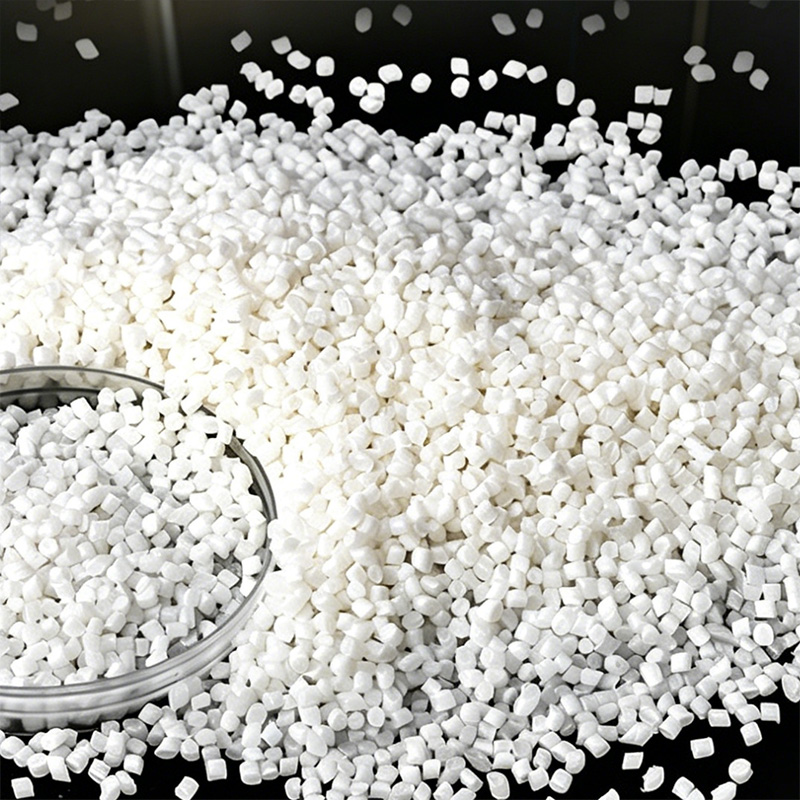
PC antistatic magic crystal is a permanently modified PC material with built-in antistatic properties. Unlike surface-coated antistatic products, its antistatic functional components are uniformly dispersed within the resin matrix, achieving electrostatic protection capabilities with the same lifespan as the finished product.
It solves the industry pain points of ordinary PC materials, such as strong insulation, easy accumulation of static electricity, and easy dust attraction. It also takes into account the excellent structural performance and processing adaptability of the PC substrate, and can directly replace ordinary plastics and coated antistatic parts. It is suitable for scenarios with strict electrostatic control requirements, such as electronic manufacturing, industrial explosion-proof, and cleanrooms.
II. Core Protection Principles
Built-in Conductive Protection (Mainstream Long-lasting Solution)
The antistatic functional components are uniformly distributed in the PC matrix, forming a continuous and stable charge conduction network. This converts static charge into a weak current for rapid conduction and discharge, thereby blocking the risk of static electricity accumulation and discharge. The protection level is measured by volume resistivity.
- Common industrial protection levels cover from 10³Ω to 10¹²Ω, encompassing the entire protection range from antistatic to conductive levels.
III. Product Categories (Classified by Protection Level and Molding Process)
(1) Classified by Electrostatic Protection Level
|
category |
Volume resistivity range |
Typical characteristics |
Applicable Scenarios |
|
Antistatic PC |
10⁹~10¹²Ω |
Inhibit static electricity buildup and reduce dust adsorption |
General cleanrooms, electronic packaging, industrial turnover |
|
Conductive PC |
10³~10⁹Ω |
Rapidly discharges static electricity and prevents ESD damage. |
Precision electronic manufacturing, explosion-proof environment, flammable and explosive working conditions |
Classification by Molding Process
1. Bulk Co-extrusion Type (Preferred for Industrial Applications): Antistatic masterbatch and PC granules are fully co-extruded and granulated in a twin-screw extruder. The functional components are uniformly embedded within the substrate, providing scratch resistance, wear resistance, and anti-aging properties without delamination. The granules can be directly injection molded or extruded, suitable for mass production of complex structural parts, and is the mainstream specification in industrial applications.
2. Post-Coating Type: Ordinary PC products are coated with an antistatic coating after production. This method is lower in cost but has poor wear resistance, suitable only for small, fixed flat observation windows and accessories, and cannot be sanded or cut.
3. Injection Molding Grade Antistatic PC Granules: Can be directly injection molded into structural parts such as electronic trays, equipment housings, and protective masks, suitable for mass production of precision parts.
IV. Key Physical, Chemical, and Safety Performance Advantages
1. Mechanical Properties (Superior to Ordinary Antistatic Plastics)
Impact resistance is fully preserved at the level of pure PC substrate, several times that of ordinary antistatic ABS; equipment fragments and workpiece splashes will not penetrate the sheet, providing dual safety protection of physical and electrostatic forces.
It has high flexural strength and thermoforming capabilities, allowing for the creation of bendable protective covers and custom-shaped viewing windows to accommodate non-standard equipment structures.
Its weight is significantly lighter than antistatic glass and metal components, facilitating the hoisting, installation, and removal of protective barriers.
2. Weather and Chemical Resistance
The base PC substrate possesses excellent oxidation and corrosion resistance, resisting the erosion of most industrial chemicals; the bulk antistatic system is unaffected by environmental humidity, and its performance does not degrade over long-term use, making it suitable for industrial production lines operating for extended periods and outdoor conditions.
3. Appearance and Processing Performance
The finished product has a smooth, clean surface with uniform color, free from exudation and oil stains, meeting the appearance requirements of high-end electronics and medical applications; it supports various processing methods such as cutting, drilling, hot bending, and injection molding, providing flexible customization options.
4. Weather Resistance and Processability
Optional double-sided hardened scratch-resistant coating resists solvents and oil stains, allowing for cutting, drilling, and hot bending; for long-term outdoor use, UV-resistant weather-resistant additives can be added to delay yellowing and aging.
5. Compliance and Safety Certifications
Products comply with RoHS and REACH environmental standards, and corresponding test reports are available; conductive grade products meet the electrostatic safety requirements of industrial explosion-proof scenarios and are suitable for use with export equipment.
V. Main Application Scenarios
1. Electronics and Electrical Manufacturing (Largest Application Area)
Anti-static transfer trays, IC carriers, cleanroom tooling fixtures, and equipment viewing windows in chip and circuit board production lines prevent electrostatic discharge from damaging precision electronic components, while reducing dust adsorption and ensuring production yield.
2. Industrial Explosion-Proof and Chemical Scenarios
Applications include equipment housings, control panels, and protective windows in flammable and explosive environments such as oil and gas, coal mines, and chemical plants. Stable electrostatic discharge capabilities prevent safety accidents caused by electrostatic sparks.
3. Medical and Clean Spaces
Used for medical equipment housings, cleanroom partitions, and cleanroom operating table components, reducing the risk of electrostatic adsorption of dust and microorganisms, meeting the high cleanliness requirements of medical and biomanufacturing.
4. Personal Protective Equipment
Anti-static protective masks and cleanroom face shields are lighter and more shatterproof than glass goggles, suitable for use with hand tools and cleanroom production lines.
5. Isolation and Protection of Automated Production Lines
The automated electronic production line utilizes partitions and clean workstations as safety barriers. Large-area, full-panel structures form protective zones, establishing a comprehensive electrostatic control and physical protection space.
VI. Comparison with traditional antistatic materials
|
Compare |
Body-type antistatic PC |
Coated antistatic PC |
Ordinary antistatic ABS |
Antistatic glassAntistatic glass |
|
Impact resistance |
Extremely strong, not easily broken by impact |
Excellent, the substrate is PC |
Medium strength; prone to cracking and breaking upon impact with heavy objects. |
Extremely fragile, fragments pose a safety hazard |
|
Antistatic durability |
Permanent, with the same lifespan as the product. |
Surface type, coating wears off after 1-2 years. |
Generally, it is greatly affected by ambient humidity. |
Permanent, but prone to accumulating dust and difficult to clean. |
|
Process- ability |
It can be bent, cut, injection molded into custom shapes and punched. |
It can only be cut simply; it cannot be thermoformed |
Only conventional structures can be injection molded. |
It cannot be bent; it can only be cut to a fixed size and punched. |
|
Use period |
Built-in functional system, anti-aging for more than 5 years |
The coating is prone to wear and tear, leading to damage. |
Performance gradually declines |
Fragile, high maintenance and replacement costs |
|
weight |
Lightweight |
Lightweight |
Relatively lightweight |
Heavy and difficult to install over a large area |
|
Total cost |
High cost-performance ratio in the mid-to-high -end market |
Low-cost entry-level options |
Mid-to-low -end general options |
The unit price is the highest, and the installation and maintenance costs are high. |
VII. Key Technical Considerations for Selection
1. Protection Level Matching: PC antistatic materials must be selected based on the electrostatic risk level of the scenario. Different resistivities have significantly different effects in different scenarios; mismatch will lead to insufficient protection or wasted costs.
2. Resistivity and Power Matching: For low-risk, general dustproof scenarios, select an antistatic grade of 10⁹~10¹²Ω; for high-risk scenarios such as precision electronics and explosion-proof applications, a conductivity grade of 10⁶Ω or lower is required.
3. Thickness Selection: 3-5 mm is recommended for observation windows of small equipment; 6-10 mm is recommended for workstation enclosures and partitions to balance impact resistance and protective redundancy.
4. Prohibited Use Scenarios: The material must not be placed directly on strong electric arcs or high-voltage breakdown paths; it is only used to block diffuse static electricity and discharge surface charge. Direct high-voltage contact will accelerate material aging, leading to breakdown and failure.
VIII. Industry Technology Evolution
1. Nanoscale Dispersion Modification: Utilizing nano-conductive fillers to achieve ultra-low resistivity while maintaining high light transmittance and low haze, this is the mainstream process for next-generation transparent antistatic PC.
2. Multifunctional Composite Panels: Integrating electrostatic protection, flame retardant properties, and electromagnetic shielding, suitable for cleanroom environments in precision semiconductor processing.
3. Biodegradable and Environmentally Friendly Antistatic PC: Modified PC substrates compliant with RoHS and REACH export environmental regulations.
4. Integrated Intelligent Sensing: The sheet incorporates a built-in electrostatic monitoring module, automatically triggering audible and visual alarms when the concentration exceeds the standard, achieving proactive safety protection.
IX. Conclusion
With its durable and stable electrostatic protection capabilities, excellent impact resistance and processing performance, lightweight design, and long-term weather resistance, PC antistatic crystal overcomes the shortcomings of traditional coated antistatic materials (short lifespan and unstable performance) and antistatic glass (fragile and bulky), becoming an irreplaceable structural protection material in industrial electrostatic safety systems.
Against the backdrop of the upgrading of the electronics manufacturing industry, the increasing requirements for industrial explosion protection, and the popularization of cleanroom engineering, permanent antistatic PC materials have become the standard configuration for industrial electrostatic protection, ensuring production safety and improving product yield and maintenance efficiency.