

I. Basic Definitions and Core Positioning
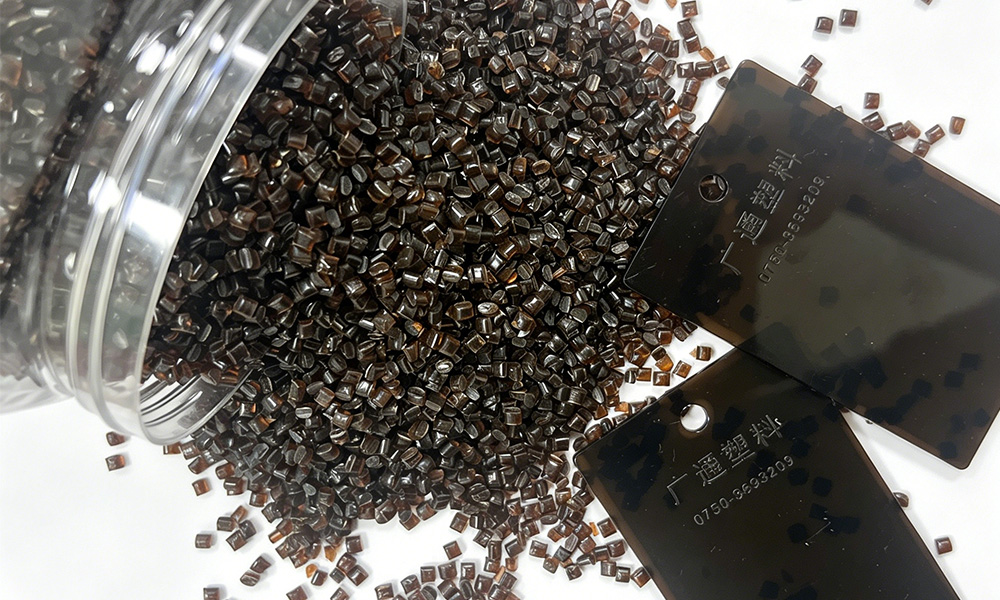
Laser-protective PC material is a specialty engineering plastic made from PC resin as the base material, modified by adding specialized laser-absorbing dyes and other additives. It serves as the primary safety protection substrate in industrial laser applications, used to block stray and diffusely reflected laser beams in the ultraviolet, visible, and infrared spectra, thereby protecting the human eyes, skin, and precision components from damage caused by laser radiation. while retaining PC’s inherent advantages of impact resistance, flame retardancy, and lightweight properties. It serves as an upgraded alternative to laser-protective glass and acrylic protective panels.
II. Core Principles of Protection
Absorptive Protection (95% of products on the market)
Selective light-absorbing additives are uniformly dispersed throughout the PC matrix. These additives are precisely matched to specific laser wavelengths, converting laser energy into low-heat thermal energy that is dissipated, thereby blocking the beam from penetrating. The level of protection is measured by the optical density (OD) value.
- Common industrial protection levels range from OD4 to OD7+.
III. Product Categories (Classified by Protective Wavelength Range and Color Scheme)
(1) Classification by Protective Laser Wavelength Range
|
Category |
Compatible Laser Wavelength |
Typical Color |
Standard Protection Level |
Applicable Lasers |
|
UV Protection (PC) |
190~400nm |
Light Yellow / Bright Yellow |
OD6+ |
355 nm UV marking, 266 nm research-grade UV lasers |
|
Visible Green Light Protection (PC) |
400~550nm |
Amber / Orange-Yellow |
OD4~OD6 |
532 nm green light engraving, medical aesthetics lasers |
|
Near-Infrared Protection PC |
800~2000nm |
Light Gray / Dark Green |
OD5~OD7+ |
1064 nm fiber lasers, YAG lasers, semiconductor lasers |
|
Far-infrared CO₂ protection PC |
9300~10600nm |
Dark gray |
OD6+ |
CO₂ laser cutting, non-metallic engraving machines |
(2) Classification by Molding Process
1. Base Material Blended Extrusion Type (Preferred for Industrial Applications)
Laser-functional masterbatch and PC pellets are co-extruded into sheets after twin-screw compounding. The protective additives are embedded within the sheet, making it scratch-resistant and resistant to aging and delamination. The sheets can be cut, bent, and drilled as a whole. Standard large sheet dimensions are 1220 × 2440 mm, with thicknesses ranging from 3 to 10 mm. New Zhaoguang Optoelectronics offers mainstream specifications.
2. Post-Coating Type
Standard PC sheets are coated on one side after production. This method is lower in cost but offers poor wear resistance, making it suitable only for small, fixed viewing windows and accessories; it cannot be sanded or cut.
3. Injection-Molding Grade Laser-Protective PC Granules
Can be directly injection-molded into eyeglass frames, protective face shields, and small equipment viewing windows, suitable for the mass production of precision components.
IV. Key Physical, Chemical, and Safety Performance Advantages
1. Mechanical Properties (Outperforms Glass and PMMA)
Impact resistance: 250 times that of ordinary glass and 30 times that of PMMA sheets of the same thickness; equipment debris and workpiece splatter will not penetrate the sheet, providing dual safety protection against laser exposure and explosions;
It offers high flexural strength and is thermoformable, allowing for the fabrication of curved protective covers and custom-shaped viewing windows to accommodate non-standard equipment structures;
Its weight is significantly lower than that of tempered safety glass, facilitating the hoisting, installation, and removal of protective barriers.
2. Flame-Retardant and Heat-Resistant Properties
The base PC substrate has a flame-retardant rating of UL94 V-0/V1. Localized high temperatures caused by diffuse laser reflection are unlikely to ignite fires. With a heat deflection temperature exceeding 120°C, it is suitable for laser processing stations operating for extended periods and complies with industrial fire safety regulations.
3. Optical Visibility
Custom formulations maintain a visible light transmittance (VLT) of 25%–70% while providing high optical density (OD) protection, allowing operators to clearly observe the processing status inside the equipment without completely blocking light and disrupting production operations.
4. Weather Resistance and Processability
Optional double-sided hardened anti-scratch coatings provide resistance to solvents and oil stains; supports cutting, drilling, and thermal bending, offering flexible processing options; For long-term outdoor use, UV weather-resistant additives can be incorporated to delay yellowing and aging.
5. Compliance and Safety Certifications
Domestically, the product complies with GB/T 7247.4-2016 “Safety of Laser Products—Laser Protective Screens”; internationally, it has passed ANSI Z136.7, EU EN12254, and German ECS laser safety certifications, making it suitable for use with exported equipment.
V. Main Application Scenarios
1. Industrial Laser Processing Equipment (Largest Application Area)
Fiber laser cutting machines, laser welding machines, marking machines, observation windows for equipment cabinets on sheet metal cutting machines, enclosed protective barriers for machine bodies, and mobile protective screens for workstations, etc. These components block reflected 1064nm laser light to prevent accidental eye injuries to multiple people in the workshop.
2. Medical and Aesthetic Laser Equipment
Viewports and protective covers for laser instruments used in skin spot removal, hair removal, ophthalmic surgery, and dental treatments. Specialized PC protective lenses/panels for the 532 nm and 1064 nm wavelength bands protect medical staff and patients.
3. Laboratory and Research Optical Platforms
For UV lasers, femtosecond ultrafast laser optical path enclosures, and optical darkbox viewing ports in universities and research institutes; these products block stray light to prevent damage to precision optical sensors caused by laser interference.
4. Personal Protective Equipment
Laser safety goggles and head-mounted protective face shields—lightweight and shatter-resistant compared to glass goggles—are suitable for use with handheld laser pointers and portable laser equipment.
5. Laser Production Line Isolation and Protection
Partitioning for automated laser production lines and safety partitions for laser workstations in cleanrooms; large-area, full-panel construction creates protective zones to establish comprehensive laser radiation isolation spaces.
VI. Comparison with PMMA Laser Safety Sheets and Safety Glass
|
Comparison |
Laser-Protective PC Sheet |
PMMA Protective Sheet |
Laser-Protective Tempered Glass |
|
Impact Resistance |
Extremely strong; not shatter upon impact |
Moderate; prone to cracking and shattering upon impact with heavy objects |
Extremely brittle; shards pose a safety hazard |
|
Flame Retardancy |
V1/V0, difficult to ignite |
Flammable, melts and drips at high temperatures |
Non-flammable, but may shatter when exposed to laser spots |
|
Processability |
Can be bent, cut into custom shapes, and punched |
Can only be cut simply; cannot be thermoformed |
Cannot be bent, can only be cut to fixed lengths and punched |
|
Service Life |
Contains built-in additives, resists fading for 3–5 years |
Surface-colored, becomes translucent and yellowish after 1–2 years |
Coated models are prone to wear and tear, leading to failure Weight |
|
Weight |
Lightweight |
Relatively light |
Heavy, difficult to install over large areas |
|
Overall Cost |
Best value for money in the mid-to-high-end range |
Low-cost entry-level option |
Highest unit price, high installation and maintenance costs |
VII. Key Technical Considerations for Selection
1. Precise Wavelength Matching: Protective PC must be selected based on the laser’s emission wavelength; protection is ineffective across different wavelength bands;
2. Matching Optical Density (OD) to Power: For Class 3 low-power lasers, select OD 4–OD 5; for Class 4 high-power industrial lasers, OD 6 or higher is required;
3. Thickness Selection: 3–5 mm for observation windows on small equipment; 6–10 mm is recommended for workstation enclosures and partitions to balance impact resistance and protective redundancy;
4. Prohibited Usage Scenarios: Do not position the sheet directly in the path of a direct main laser beam; use it only to block diffuse reflection and scattered laser light. Direct beam energy can rapidly heat the sheet, causing perforation and fire.
VIII. Directions for Industry Technology Evolution
1. Nano-doped Modification: Utilizing nano-oxide masterbatch modification to achieve ultra-high OD protection while maintaining high light transmittance, reducing color aberration and haze—this is the mainstream process of the new generation;
2. Multifunctional Composite Panels: Integrating laser protection, anti-static properties, and electromagnetic shielding, suitable for cleanrooms used in precision semiconductor laser processing;
3. Biodegradable, Eco-Friendly Protective PC: Modified PC substrates that comply with RoHS and REACH environmental regulations for export;
4. Integrated Smart Sensing: Sheets incorporate laser intensity sensing modules that trigger automatic audible and visual alarms when levels exceed limits, enabling proactive safety protection.
IX. Conclusion
With its five core advantages—laser barrier properties, explosion-proof and impact-resistant capabilities, flame-retardant safety, ease of processing and lightweight design, and long-term durability—PC material for laser protection addresses the shortcomings of traditional laser-protective glass (which is fragile) and acrylic protective materials (which lack sufficient safety), making it an irreplaceable structural protective material in industrial laser safety systems. Against the backdrop of the widespread adoption of fiber lasers and the growing use of laser equipment in medical aesthetics and scientific research, customized-wavelength, large-format, high-transmittance, and high-definition laser-protective PC materials have become standard safety components for laser equipment, offering both practical production benefits and occupational health protection.