

I. Basic Definition and Core Positioning
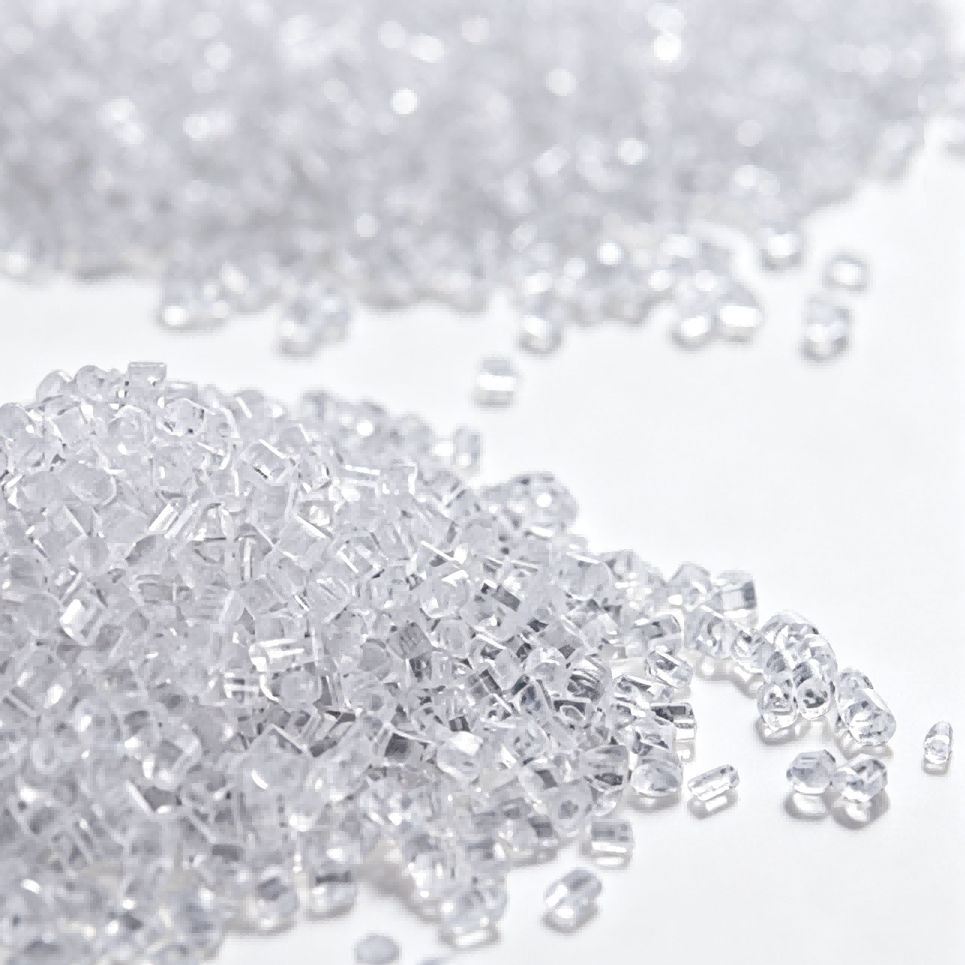
Optical guide materials are a class of special optical engineering plastics that achieve efficient light transmission based on the principle of total internal reflection. They are made from optical-grade PC (polycarbonate), PMMA (polymethyl methacrylate), and PS (polystyrene) resins as base materials, modified by adding special light-diffusing agents and refractive index modifiers. They are the core light-guiding medium for backlight modules, indicator lighting, ambient lighting, and other products.
Guangtong Plastics' PC/PMMA/PS series of optical guide plastic granules, while retaining the inherent performance advantages of each base material, have been specifically optimized for light transmission efficiency, light output uniformity, and environmental resistance. They can completely replace traditional glass light guide elements and are widely applicable to the optical design needs of diverse fields such as consumer electronics, automotive lighting, industrial equipment, and home appliances.
II. Core Working Principle of Optical Guide Materials
The core working logic of optical guide materials is based on the law of total internal reflection: when light travels from a high-refractive-index plastic substrate to a low-refractive-index air interface, if the angle of incidence is greater than the critical angle, the light will undergo continuous total internal reflection within the material, thus being directionally transmitted along the substrate and ultimately emitted uniformly from the predetermined light-emitting surface.
Guangtong plastic optical guide particles, through precise control of the additive ratio and substrate refractive index, optimize light diffusion while ensuring high transmission efficiency. This transforms point and line light sources into uniform and soft surface light sources, effectively reducing glare, dark spots, and light energy loss. It is compatible with various design schemes such as side-lit back-lights and irregularly shaped light guide structures.
III. Product Classification
(I) Classification by Substrate Material and Performance
Based on the type of base resin, Guangtong Plastic Optical Guide Materials are divided into three major product series, each suited to different performance requirements and application scenarios.
|
Product Series |
PC optical light guide materials |
PMMA optical light guide materials |
PS optical light guide materials |
Describe |
|
Light transmittance (%) |
88%~90% |
92%~93% |
89%~91% |
Low light transmission loss |
|
Refractive index |
1.586 |
1.491 |
1.590 |
Matching different total internal reflection optical path designs |
|
Light output uniformity(%) |
≥92% |
|
|
No dark areas, no bright spots, no rim shadows |
|
Haze adjustment range(%) |
1%~80% Customizable |
|
|
The light diffusion effect can be adjusted as needed |
|
Yellowing resistance rating |
≥4.5 level (1000h UV aging test) |
|
|
It does not easily yellow under long-term light exposure |
(II) Classification by Molding Process
1. Blended Extrusion Substrate Type (Mainstream for Industrial Applications): The light-guiding master-batch and base resin are blended using a twin-screw extruder and then extruded to produce light-guiding sheets and rods. The light-guiding components are evenly distributed within the material, making it scratch-resistant, aging-resistant, and less prone to delamination. It can be cut, bent, polished, and otherwise processed. Standard large sheets can be customized to fit large-size back-lighting and general lighting applications.
2.Injection Molding Grade Light-Guiding Particles: These can be directly injection molded into various irregularly shaped light-guiding components, such as light guide pillars, light guide strips, and irregular light-guiding structures. Suitable for mass production of precision optical components, they offer high molding accuracy, strong mass production stability, and adaptability to complex product structure designs.
IV. Core Physical, Chemical, and Optical Performance Advantages
1. Superior Optical Performance
All products utilize high-purity optical-grade base resins, combined with specialized light-diffusing agents, resulting in high refractive index and uniform light emission. The PMMA substrate boasts a light transmittance exceeding 92%, while the PC substrate maintains high light transmittance while ensuring impact resistance, effectively reducing light source loss, improving light energy utilization, and meeting the parameter requirements of various precision optical designs.
2. Outstanding Mechanical Properties
PC-based light guide materials exhibit impact resistance far exceeding that of ordinary glass, making them less prone to breakage under external impact, thus mitigating the safety risks associated with glass breakage. All materials possess excellent mechanical strength, supporting the design and long-term use of special light guide structures such as thin-walled and slender shapes.
3. Weather Resistance and Aging Resistance
By adding weather-resistant modifiers, products can resist yellowing and performance degradation caused by ultraviolet radiation, making them suitable for outdoor lighting, automotive electronics, and other applications requiring long-term outdoor exposure, extending product lifespan and maintaining stable long-term optical performance.
4. Chemical Resistance, Flame Retardancy, and Heat Resistance
The material is colorless and transparent, possessing excellent heat resistance, acid resistance, and oil resistance. The PC substrate achieves the corresponding flame retardant rating, making it suitable for industrial equipment, household appliances, and other applications requiring fire safety, complying with industry safety standards.
5. Strong Processing Adaptability
The material has excellent flow-ability, adaptable to various processing techniques such as injection molding, extrusion, hot bending, and polishing. It can be molded into various complex and irregular structures, supporting customized light guide designs. High mass production efficiency and good dimensional stability allow it to meet the diverse product development needs of different industries.
V. Main Application Scenarios
1. Consumer Electronics and Display (Core Application Area)
Used in backlight module light guide plates for mobile phones, tablets, and monitors, as well as components such as keyboard indicator lights and power button light guide pillars, achieving a uniform and soft light emission effect. It is a core optical material for consumer electronics backlight systems, adapting to the design trend of thinner and lighter electronic products.
2. Automotive Lighting and Interior Design
Used in light guide strips and structures for automotive daytime running lights, taillights, and interior ambient lighting, as well as backlight components for center console buttons and instrument panel; with high impact resistance, weather resistance, and temperature resistance, it can adapt to the complex temperature, vibration, and lighting environments of automotive scenarios.
3. Home Appliances and Kitchen & Bathroom Appliances
Providing light guide elements such as control panel back-lights and status indicator lights for various small home appliances and kitchen and bathroom appliances. Relying on temperature resistance and flame retardant properties, it adapts to home appliance safety standards while achieving a clear and uniform indicator light effect.
4. Industrial Equipment and Instruments
Applications include back-lighting for industrial instruments and meters, equipment status indicator lights, and machine tool lighting guides. Their high impact resistance and aging resistance make them suitable for harsh industrial operating environments.
5. Advertising, Decoration, and General Lighting
Used in the production of illuminated signs, decorative light strips, and light-guided advertising light boxes, they achieve ultra-thin, uniform surface illumination effects. The lightweight nature of the materials facilitates installation and diverse design options.
VI. Performance Comparison with Traditional Glass Light Guides
|
Comparison Dimensions |
PC/PMMA/PS plastic optical guide materials |
Traditional glass light guide |
|
Impact resistance |
PC material has a much higher impact resistance than glass and is less likely to shatter upon impact. |
It is extremely brittle and easily breaks under external impact. |
|
Flame retardant and heat resistant |
PC substrates can meet high-level flame retardant standards. |
Non-flammable; localized high temperatures may cause it to crack. |
|
Processing performance |
It can be injection molded, extruded, and thermoformed, adaptable to complex irregular structures, and has high mass production efficiency. |
The molding method is limited, and the processing cost for complex structures is extremely high. |
|
Service life |
Built-in weather-resistant additives enable long-term resistance to yellowing and slow performance degradation. |
While its optical performance is stable, its fragility limits its actual lifespan. |
|
Weight and Installation |
Its density is much lower than that of glass, making it easier to install and contributing to the product's lightweight design. |
Large-weight and large-sized products are difficult to install and pose significant transportation risks. |
VII. Key Technical Considerations for Material Selection
1. Precise Matching of Substrate and Application: For applications requiring high impact resistance, outdoor use, and flame retardancy, PC substrate is preferred; for high light transmittance and precision indoor back-lighting, PMMA substrate is preferred; for low-cost, simple-structure products, PS substrate can be selected.
2. Matching Optical Parameters to Design Requirements: Based on the light source type, light uniformity, and luminous efficiency requirements, select the appropriate grade with corresponding diffusing agent content and refractive index to balance light transmission efficiency and light uniformity.
3. Thickness and Structural Adaptation: The thickness and structural design of the light guide plate and light guide pillars must match the material's light transmission characteristics to avoid problems such as dark areas and excessive light loss. If necessary, the design can be optimized through optical simulation.
4. Avoiding Inappropriate Usage Scenarios: Avoid prolonged contact of materials with strong corrosive solvents; for long-term outdoor use, select specialized weather-resistant modified grades to avoid accelerated yellowing caused by ordinary grades.
VIII. Industry Technology Development Directions
1. Nano-doping Modification Technology: Utilizing nano-oxide masterbatch modification to achieve highly uniform light output at ultra-thin thicknesses, while reducing color difference and haze. This aligns with the ultra-thin and high-definition design trends in consumer electronics and automotive lighting, representing the mainstream process direction for next-generation photo-conductor materials.
2. Multifunctional Composite Sheets: Integrating multiple functions such as light guiding, antistatic properties, electromagnetic shielding, and antibacterial properties, expanding applications in special scenarios such as semiconductor clean-rooms and medical equipment.
3. Environmentally Friendly and Recyclable Photo-conductor Materials: Developing modified substrates and recyclable photo-conductor materials that comply with RoHS, REACH, and other environmental regulations, responding to the global trend of low-carbon and environmentally friendly industrial development.
4. Intelligent Sensing Integration: Integrating light-sensing modules into light-guiding materials to achieve functions such as automatic brightness adjustment and fault warning, empowering active light efficiency management in intelligent lighting and intelligent cockpits.
IX. Conclusion
PC/PMMA/PS optical guide materials, with their high light transmission efficiency, excellent impact resistance and safety, flexible processing adaptability, and outstanding overall cost-effectiveness, are gradually replacing traditional glass light guides and becoming the mainstream optical solution in the lighting and back-lighting fields.
Guangtong Plastics' optical guide material series covers multiple substrates and application scenarios. Customized material modification solutions can be provided based on customers' specific product designs and usage environments, offering stable, reliable, and high-performance optical plastic products to support industries such as consumer electronics, automotive, home appliances, and industry.