

I. Basic Definition and Core Positioning
PC/PMMA/PS Matting plastic is a modified optical material based on a ternary blend. By precisely controlling the micro-phase structure and mixing ratios of the three resins, it achieves an optimal balance of optical, mechanical, and processing properties. This overcomes the inherent limitations of single-component optical materials: PMMA offers excellent optical properties but is brittle and has poor impact resistance; PC boasts superior toughness but has a slightly lower refractive index and light transmission; PS provides good processing fluidity but poor weather resistance.
Its core positioning lies in the "integration of optical and structural performance." It enables high-precision light transmission and diffusion while serving as a structural component capable of withstanding impact and environmental stress. Capable of being directly molded into complex optical parts without the need for secondary processing, it serves as a cost-effective, high-performance alternative material in the mid-to-high-end optical sector.
II. Core Working Principles
1. Optical Performance Modulation Principle
Through the design of the blend's phase structure, light undergoes uniform transmission, refraction, or diffuse reflection within the material. Specific optical effects—such as high light transmission, high diffusion, or high refraction—can be customized to meet requirements. The material exhibits excellent optical uniformity, free from noticeable gel particles or stress marks; it complies with environmental standards for optical materials, offering low light loss and superior color rendering.
2. Mechanical Performance Synergy Principle
The PC phase acts as a tough dispersed phase within the resin matrix, effectively absorbing impact energy and inhibiting crack propagation, thereby significantly enhancing impact strength. The PMMA phase contributes high light transmission and surface finish, while the PS phase optimizes melt fluidity to improve molding precision and processing efficiency. The synergy of these three components achieves a balance between optical and mechanical performance.
III. Product Categories (Classified by optical properties and molding processes)
- Classification by optical function
|
Category |
Key optical properties |
Typical Applications |
|
High light-transmission type |
High light transmission efficiency, low loss, and uniform light output. |
LED light guide plates, light guide pillars, backlight modules, and ambient light strips. |
|
Light-diffusing type |
The light is evenly diffused with low glare and a soft, pleasing effect. |
Lighting shades, diffuser plates, light-softening panels, and luminous decorative components. |
|
High-refractive-index type |
High refractive index and excellent light-focusing performance. |
Optical lenses, automotive lighting optics, precision instrument lenses |
(2) Classification by Molding Process
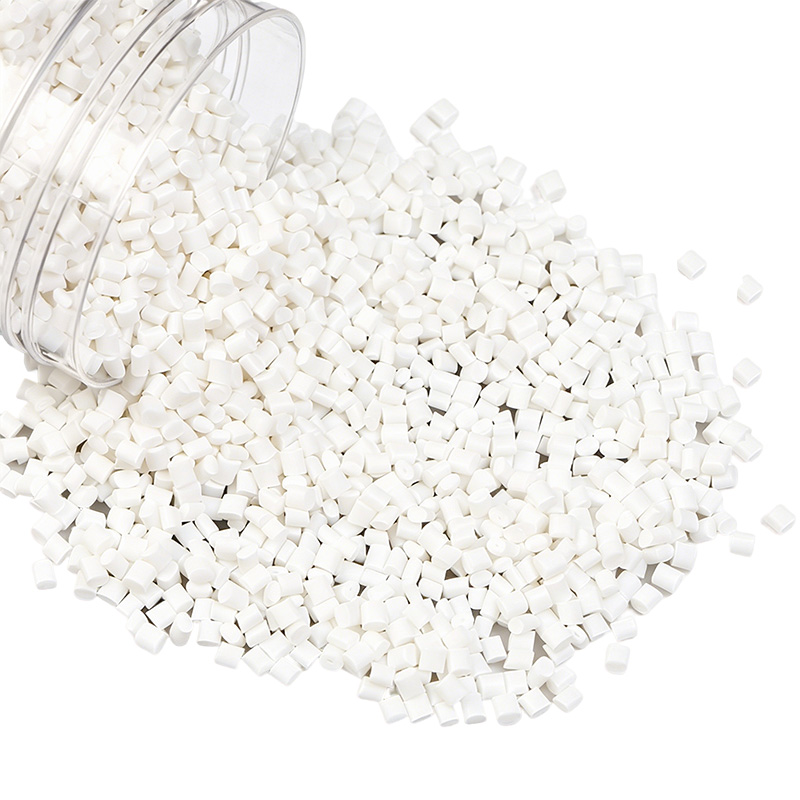
1. Injection-molding grade granules (Preferred for precision optical components)
Produced via precision twin-screw compounding and pelletizing, ensuring uniform dispersion of functional components and excellent optical consistency. Suitable for direct injection molding of complex micro-optical components and irregularly shaped light guides; ideal for mass production in sectors such as electronics, automotive lighting, and precision instruments; represents the mainstream specification for industrial applications.
2. Extrusion-grade sheets/panels
Produced via extrusion to create large, flat panels featuring smooth surfaces and excellent optical uniformity. They support secondary processing such as cutting, bending, and polishing, making them suitable for applications like large-area light guide plates, diffusion panels, and architectural daylighting components.
IV. Key Physical, Chemical, and Optical Advantages
1. Excellent optical performance
Features a high refractive index, superior light transmission and diffusion capabilities, and excellent optical uniformity, all while meeting industry environmental standards. Parameters such as light transmission, haze, and refractive index can be customized to meet specific light-control requirements, making it an ideal alternative to optical glass.
2. Superior impact resistance
Impact resistance far exceeds that of ordinary glass and pure PMMA; resistant to shattering under external force, significantly enhancing the safety and service life of optical devices. Particularly suitable for automotive, outdoor, and industrial applications requiring high impact resistance.
3. Weather and aging resistance
Demonstrates excellent resistance to weather and aging; resists yellowing and optical degradation during long-term outdoor exposure. Maintains stable light transmission and optical efficiency, making it suitable for long-life applications such as outdoor lighting and automotive exterior components.
4. Comprehensive environmental stability
The base material is colorless and transparent, offering heat, acid, oil, and flame resistance. It performs stably in complex industrial environments without performance degradation caused by temperature or chemical exposure, meeting the demands for optical components in harsh operating conditions.
5. Mechanical and processing properties
Combines good mechanical strength with excellent processability; supports various methods such as injection molding, extrusion, and thermoforming. Offers high molding precision and superior surface finish, enabling the production of complex precision optical components while significantly reducing processing difficulty and production costs. V. Key Application Scenarios
1. Lighting and Display (Core Application Area)
Widely used in components such as light guide plates, diffuser plates, and lamp covers for LED lighting fixtures, as well as display backlight modules and backlit buttons. These materials deliver uniform, soft light output while offering significant weight reduction compared to glass, thereby enhancing product design flexibility.
2. Automotive Optics
Used in optical components for automotive interior and exterior lighting—such as headlight lenses, ambient light guides, instrument cluster covers, and illuminated interior trim—these materials combine impact resistance, weatherability, and optical performance, making them suitable for the demanding temperature fluctuations and vibration environments found in vehicles.
3. Consumer Electronics
Applied in button backlighting, indicator light lenses, light guides, and transparent display components for mobile phones, computers, and home appliances. They enable the design of miniaturized, high-precision optical structures, aligning with the trend toward thinner and lighter consumer electronics.
4. Industry and Instrumentation
Used for industrial instrument windows, sensor covers, and equipment optical panels. These materials maintain stable optical performance and structural integrity in complex industrial environments, ensuring the precise operation of equipment.
5. Architecture and Home Decor
Used in architectural daylighting panels, decorative translucent partitions, illuminated home decor elements, and lamp shades. They offer a blend of aesthetics and durability; compared to glass, they are safer and allow for greater processing flexibility, catering to personalized design requirements.
VI. Comparison with Traditional Optical Materials
|
Comparison dimensions |
PC/PMMA/PS Light-Guiding Plastics |
Optical glass |
Standard PS optical material |
|
Optical properties |
Excellent performance; customizable light-guiding, diffusing, Or high-refractive-index properties. |
Excellent, but heavy. |
Generally, the light distribution is uneven. |
|
Impact resistance |
Excellent; resistant to breakage. |
Poor quality, fragile, and poses significant safety hazards. |
Poor; prone to shattering upon impact. |
|
Weather and aging resistance |
Good; resistant to yellowing over the long term. |
Excellent, but prone to dust accumulation and difficult to clean. |
Poor quality; ages rapidly and becomes brittle easily. |
|
Processing and molding properties |
Excellent performance; suitable for injection molding and extrusion; capable of forming complex structures. |
Poor; limited to cutting and grinding; difficult to shape. |
Good, but dimensional accuracy is low. |
|
weight |
Lightweight—only about half the weight of glass. |
substantial; weighty; massive; profound |
light |
|
Overall safety |
High; shatters without producing sharp fragments. |
Low; the fragments are sharp and can easily cause injury. |
Poor |
|
Total life-cycle cost |
Mid-to-high-end, offering great value for money. |
High unit price; high installation and maintenance costs. |
Low cost, frequent replacement |
VII. Key Technical Considerations for Material Selection
- Optical Parameter Matching:
Select the appropriate grade based on the application's luminous efficiency requirements, precisely matching parameters such as refractive index, light transmission, and haze; different formulations yield distinct optical effects.
- Environmental Suitability:
For outdoor, high-temperature, or chemically corrosive environments, prioritize grades with high weather and corrosion resistance to prevent performance degradation during long-term use.
- Molding Process Compatibility:
Prioritize injection-molding grade pellets for precision micro-optical components and extrusion-grade sheets for large-area flat optical parts to ensure molding quality and optical uniformity.
- Structural Design Optimization:
Optimize injection molding processes for thick-walled or complex-shaped structures to avoid stress concentration and optical dark spots; for thick-walled parts, high-flow grades are recommended to improve the molding yield rate.
VIII. Industry Technical Evolution Trends
- High Refractive Index Modification:
Further enhance the material's refractive index through formulation optimization to align with the trend toward thinner, miniaturized optical devices and enable more compact optical designs.
- Multifunctional Composite Modification:
Integrate optical functionality with properties such as flame retardancy, antistatic capabilities, anti-glare, and UV resistance to meet the complex demands of high-end sectors like semiconductors, medical devices, and new energy.
- Eco-friendly Optical System Optimization:
Develop environmentally friendly formulations—featuring low VOCs, halogen-free composition, and food-contact compliance—to meet increasingly stringent global regulations and expand applications in medical and food-contact sectors.
- Micro/Nano-Optics Compatibility:
Optimize material performance for micro-structure molding to support precision processes like nano-imprinting and micro-injection molding; this enables precise light manipulation and supports the development of next-generation display technologies such as AR/VR and Mini/Micro LED.
IX. Conclusion
With their superior light manipulation capabilities, excellent impact and weather resistance, lightweight design, and outstanding processing compatibility, PC/PMMA/PS light-guiding plastics effectively overcome the limitations of traditional optical glass (heavy and fragile) and single-resin optical materials. They have emerged as core materials in modern optics, offering a balance of performance, safety, and cost-effectiveness. Driven by advancements in lighting and display technologies, the rapid evolution of automotive optics, and the ongoing trend toward thinner and lighter consumer electronics, optical plastics—enhanced through blending and modification to offer both high performance and great design flexibility—are set to gradually replace traditional optical materials. They are becoming the mainstream choice for achieving lightweight designs and quality upgrades in optical components across various sectors.